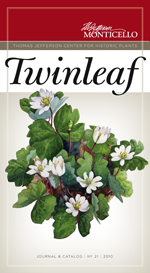
 2010
2010
- Thomas Jefferson's Legacy in Gardening and Food
- Climbers at Monticello
- The China (Rose) Revolution
- Greetings from the Thomas Jefferson Center for Historic Plants
- Musings from the Tufton Nursery
2009
- Jefferson's Retirement Garden (pdf)
- Jefferson's Botanical Catalog in Notes on the State of Virginia (pdf)
- Sustainability and Native Plants Featured at the New Visitor Center (pdf)
2008
2007
- Jefferson's Horticultural Neighborhood: A Rational Society of Gardeners (pdf)
- Seeds at Monticello: Saving, Storing, Sharing (pdf)
2006
2005
- Inspirations from the Woodlands: Jefferson's Abiding Attachment to Philadelphia's Botanical Riches (pdf)
- "The Work is Very Heavy" - Gardeners at Jefferson's Monticello (pdf)
2004
2003
- The Horticultural Potential of Lewis and Clark Plants Peculiar to the Countries They Visited
- "Public Treasures": Thomas Jefferson and the Garden Plants of Lewis and Clark
2002
2001
2000
- In the Company of Gardeners: The Flower Diaries of Jefferson, Skipwith, and Faris
- Thomas Jefferson's Favorite Vegetables
1999
1998
1997
- Strawberries: "Arcadian Dainties with a True Paradisiacal Flavor"
- "Delicious Flowering Shrubs" and Cape Bulbs in the Monticello Greenhouse
1996
- McMahon's Texas Bird Pepper: A Pretty Little Plant
- Figs: "Vulgar" Fruit or "Wholesome" Delicacy?
- Naming the Flowers ... According to Jefferson
1995
- The Royal Family of our "Democratic" Fruit: Thomas Jefferson's Favorite Apples
- Jefferson's Botanical Perseverance